Preparative Chromatography of Highly Potent Compounds: Same Rules, Different Tools?
The Shift to Preparative HPLC for Increasingly Complex HPAPIs
Modern highly potent APIs (HPAPIs) are designed for biological selectivity, not solid-state elegance, hence, they mostly don’t behave like “classical” small molecules anymore. Examples of these new entities include:
Driven by the increase in molecular complexity and heterogeneity, purification of HPAPIs is shifted away from crystallization towards preparative chromatography. Regulatory requirements are often the same for complex, high conformational flexible structures of synthetic „biomolecules“ as for small molecules, forcing the use of preparative HPLC to remove closely related impurities that cannot be controlled otherwise.
Crystallization relies on simplicity and symmetry, while preparative HPLC thrives on complexity and difference, even when those differences are subtle.
Preparative Chromatography Fundamentals Stay the Same While Risks Increase
From a first-principals perspective, HPAPIs behave like any other molecule on a preparative column. The same fundamental rules apply:
There is no separation mechanism that only specifically applies to HPAPIs, hence, the basic principles of preparative chromatography remain the same.
The defining difference is the toxicological risk, not the chemistry. Severe acute and / or chronic toxicity with OELs in the ng/m3 range turn every normally trivial operation into a potential exposure event.
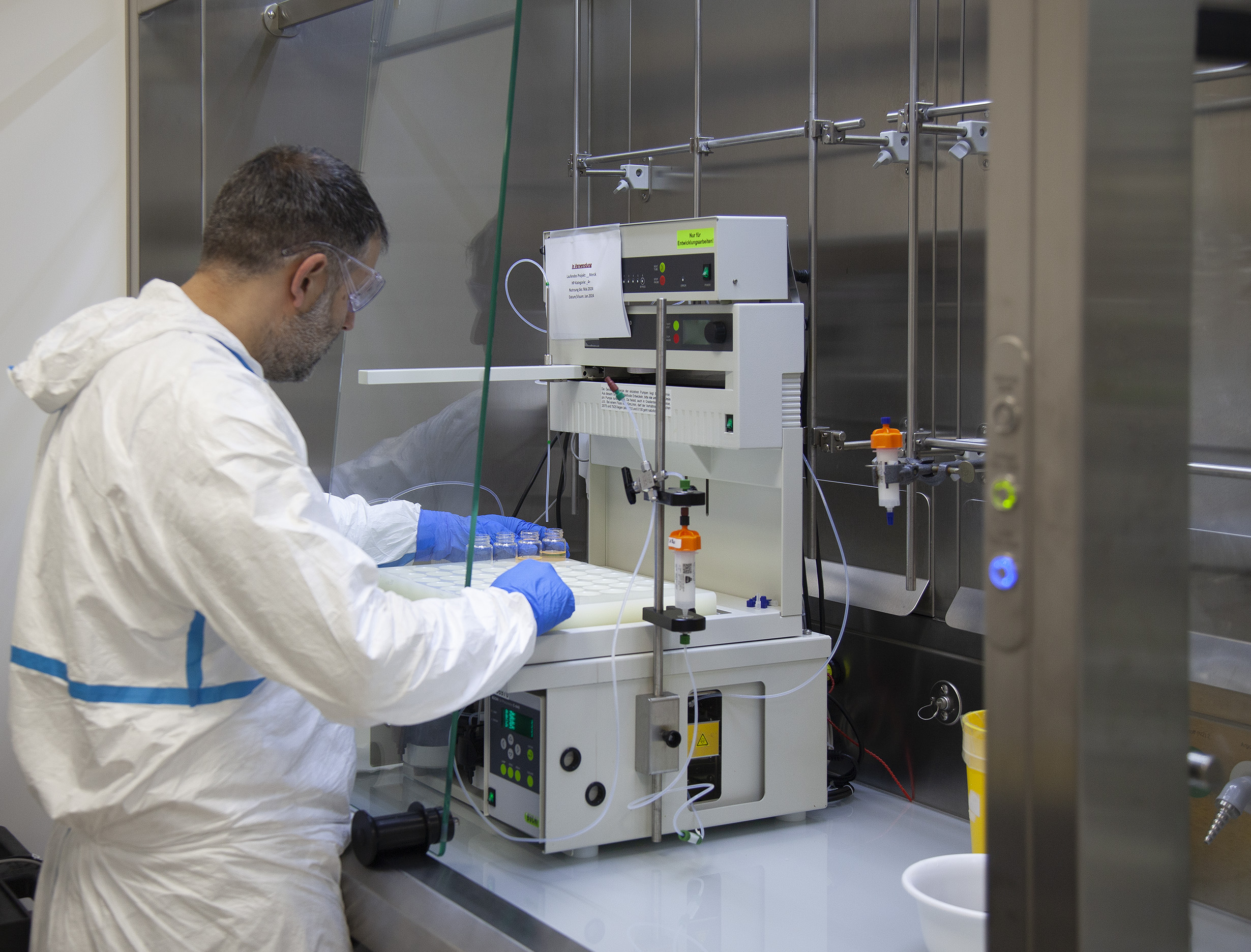
One of the most critical challenges in HPAPI manufacturing is ensuring operator and environmental safety. Therefore, stringent containment measures and personal protective equipment are essential. This does not only apply to the chemical transformation and isolation steps, but also to the purification.
| HIGH POTENCY | |||||
| Criteria | Category 0 | Category 1 | Category 2 | Category 3 | Category 4 |
|---|---|---|---|---|---|
|
OEL range [µg/m³, 8h-TWA] |
5000 – 1000 | 1000 – 100 | 100 – 10 | 10 – 1 | 1 – 0.05* |
|
Potency (therapeutic dose) [mg/d] |
> 500 | > 100 | 100 – 10 | 10 – 0.1 | < 0.1 |
- OEL range µg/m³, 8h-TWA
- 5000 – 1000
- Potency therapeutic dose, mg/d
- > 500
- OEL range µg/m³, 8h-TWA
- 1000 – 100
- Potency therapeutic dose, mg/d
- > 100
- OEL range µg/m³, 8h-TWA
- 100 – 10
- Potency therapeutic dose, mg/d
- 100 – 10
- OEL range µg/m³, 8h-TWA
- 10 – 1
- Potency therapeutic dose, mg/d
- 10 – 0.1
- OEL range µg/m³, 8h-TWA
- 1 – 0.05*
- Potency therapeutic dose, mg/d
- < 0.1
State-of-the-Art Facilities for Highly Potent Compounds
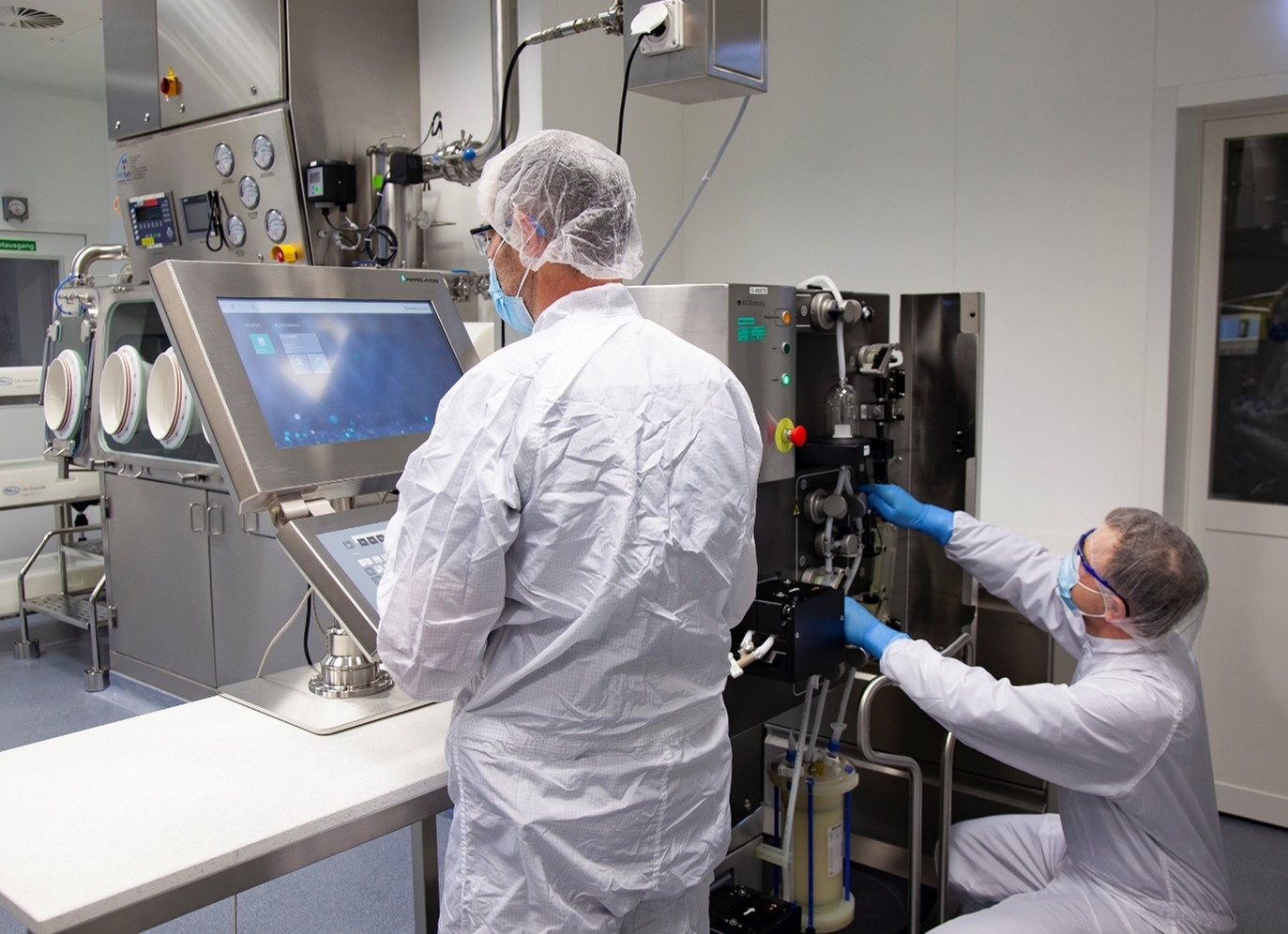
At CARBOGEN AMCIS, containment is closely related to the categorization of the molecule in terms of toxicity and the protection needed for our employees working with the compound. Therefore, all products and intermediates are assigned a category from 0 (not active) to 4 / 4+ (highly potent). Not only for the synthetic stages of any given process, but also for the chromatographic purification steps, we have state-of-the-art containment facilities available, where our trained and experienced employees can handle category 4 / 4+ materials safely.
Purification Development with Minimal Material
In addition to safe handling of highly active substances, material availability is also often a challenge in early phase development of these compounds. Screening for a proper purification process must, therefore, be feasible with small amounts of material. In this respect, preparative HPLC has clear advantages over other methods, as initial experiments can be performed with just a few milligrams of material on an analytical scale column.
Screening and development to be done with very small amounts due to:
These restrictions also apply to the development of the synthesis process that precedes chromatographic purification. This often leads to a less optimized process and thus to higher impurity loads, which further complicates purification.
Preparative Chromatography of HPAPIs at Every Scale
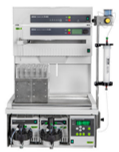
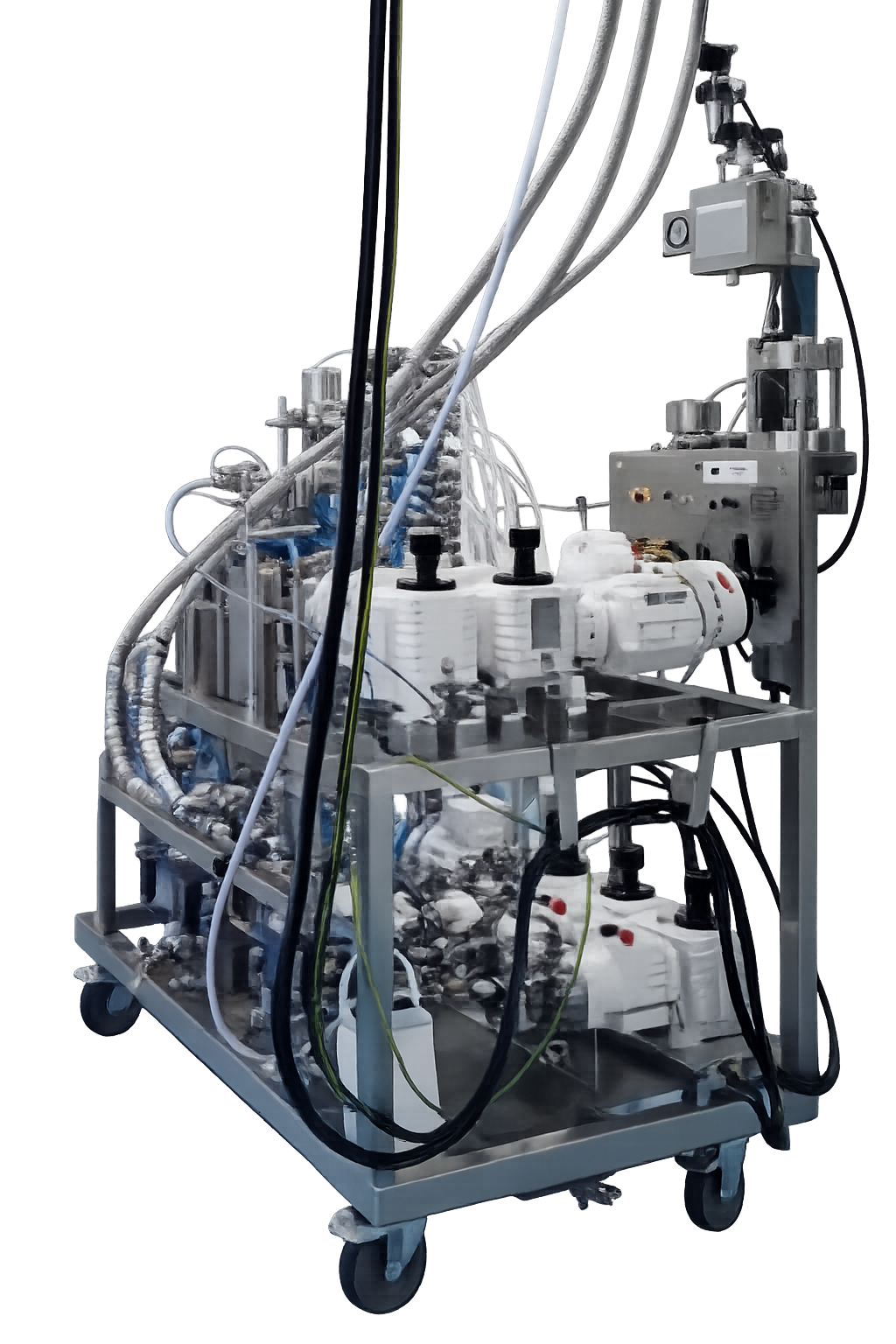
At CARBOGEN AMCIS, we have HPLC and MPLC capabilities available at different scales and in the appropriate containment facilities to handle highly potent compounds. Therefore, it is possible to offer efficient method screening and development, as well as scale-up to semi-prep scale and production scale, all within the same company. Hence, we can effectively meet the customers HPAPI purification demands at different scales.
|
Exemplary Equipment |
|
|
|
| Scale | Development | Scale-up | (Pilot-)Production |
|
Typical amounts |
milligrams – 1 g | 1 – 50 g | 50 g – kilograms |
|
Flowrates (mL/min) |
0.5 – 5 | 10 – 250 | 120 – 1500 |
|
Column size ID (cm) |
0.46 – 1.6 | 1.6 – 7.5 | 5 – 15* |
- Typical amounts
- milligrams – 1 g
- Flowrates mL/min
- 0.5 – 5
- Column size ID cm
- 0.46 – 1.6
- Typical amounts
- 1 – 50 g
- Flowrates mL/min
- 10 – 250
- Column size ID cm
- 1.6 – 7.5
- Typical amounts
- 50 g – kilograms
- Flowrates mL/min
- 120 – 1500
- Column size ID cm
- 5 – 15*
Skills and Knowledge
With more than three decades of expertise in preparative chromatography, our company operates a dedicated center of excellence that supports the whole CGAM group in complex purification challenges across the full development lifecycle. Our capabilities range from early clinical trials through to commercial supply, ensuring consistent quality, regulatory readiness and efficient scale-up at every stage. With dedicated teams at our three Swiss sites specialized in purification of HiPo compounds, we can support programs from very small-scale development through to multi-kilogram production.



(non-GMP & cGMP)
For more information
download our Chromatography
brochure or contact us today.